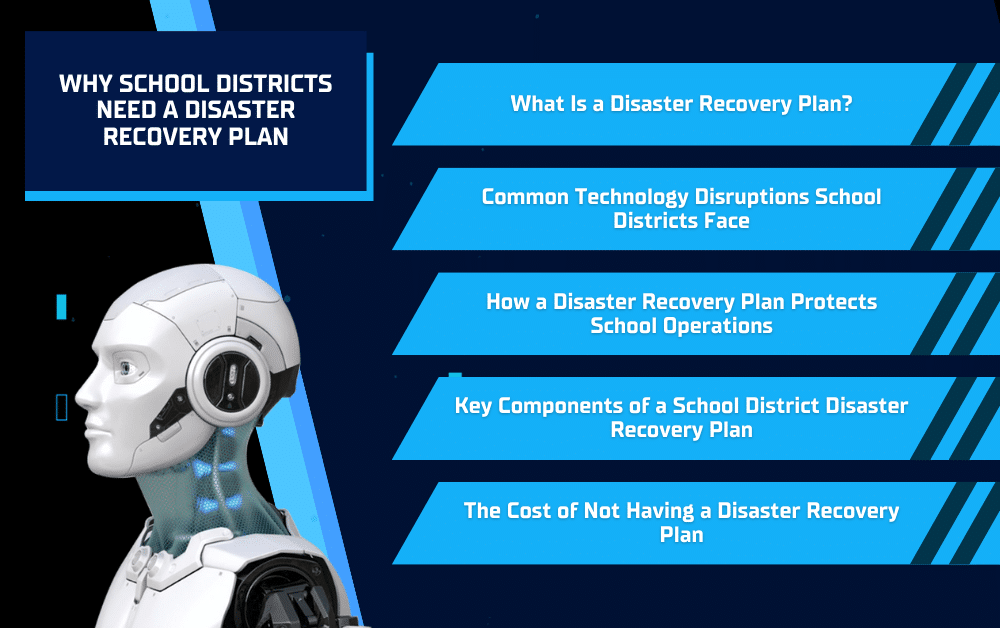
Technology has become essential to the daily operations of modern school districts. From student information systems and learning management platforms to staff communication and administrative tools, schools rely heavily on digital infrastructure to keep classrooms running smoothly. When unexpected events like cyberattacks, system failures, or natural disasters disrupt these systems, the impact can quickly affect both learning and district operations. A well-structured disaster recovery plan helps school districts prepare for these situations by ensuring critical systems and data can be restored quickly, minimizing disruption to students, teachers, and staff.
What Is a Disaster Recovery Plan?
A Strategy for Restoring Technology Systems
A disaster recovery plan is a structured approach that outlines how a school district will restore its technology systems after an unexpected disruption. This plan includes procedures for recovering servers, networks, and applications to restore essential services as quickly as possible. By having a defined recovery process in place, districts can reduce downtime and ensure IT teams know exactly what steps to take when a problem occurs.
Protecting Critical School Data
School districts store large amounts of sensitive information, including student records, staff data, and administrative documents. A disaster recovery plan ensures this data is properly backed up and can be recovered if systems fail or are compromised. Protecting this information is critical for maintaining both operational continuity and compliance with data privacy regulations.
Maintaining Access to Educational Technology
Modern classrooms rely on technology for daily instruction and communication. Learning management systems, student portals, digital assignments, and administrative tools are all part of the digital ecosystem that supports education. A disaster recovery plan helps ensure these platforms can be restored quickly so teachers and students can continue learning with minimal disruption.
Common Technology Disruptions School Districts Face
Cyberattacks and Ransomware
School districts have become increasingly common targets for cybercriminals. Ransomware attacks can lock critical systems and prevent staff from accessing important files or applications, creating major disruptions to school operations. Without strong cybersecurity protections and a disaster recovery plan in place, districts may struggle to restore systems quickly and protect sensitive student and staff data.
Hardware and Server Failures
Even well-maintained technology can fail unexpectedly. Servers, storage devices, and networking equipment are essential to school operations, and when these systems break down, access to important platforms and data may be interrupted. A disaster recovery plan helps ensure that backup systems and recovery procedures are ready when equipment fails.
Power Outages and Natural Disasters
Severe weather, power outages, or other environmental events can impact school district infrastructure. These situations may disrupt networks, damage hardware, or temporarily shut down systems. Planning allows districts to recover quickly and resume normal operations once systems are restored.
Accidental Data Loss
Not all disruptions come from cyber threats or equipment failures. Files may be accidentally deleted, systems may be misconfigured, or software updates may cause unexpected problems. A disaster recovery plan ensures there are reliable backups and procedures in place to recover important data when mistakes happen.
How a Disaster Recovery Plan Protects School Operations
Faster System Restoration
When technology systems fail, time is critical. A disaster recovery plan provides IT teams with clear procedures for restoring systems quickly and efficiently. Instead of trying to troubleshoot issues without a plan, districts can follow predefined recovery steps to get networks, servers, and applications back online faster.
Protecting Sensitive Student Information
School districts are responsible for safeguarding sensitive student and staff information. A disaster recovery plan ensures that important data is regularly backed up and securely stored so it can be recovered if systems are compromised. This helps districts maintain compliance with data protection requirements and protect the privacy of students and employees.
Keeping Classroom Technology Running
Digital tools are now a key part of the learning experience. Teachers rely on online platforms for assignments, grading, and communication with students. A disaster recovery plan helps ensure these systems can be restored quickly so classroom instruction and administrative tasks can continue with minimal interruption.
Key Components of a School District Disaster Recovery Plan
Secure Data Backups
Reliable backups are the foundation of any disaster recovery plan. School districts should regularly back up critical data such as student records, administrative documents, and system configurations. These backups should be stored securely, often in cloud or off-site locations, so they remain accessible even if local systems fail.
Recovery Priorities for Critical Systems
Not all systems need to be restored at the same time. A disaster recovery plan identifies which systems are most important for daily operations and should be prioritized during recovery. For school districts, this often includes student information systems, network infrastructure, communication tools, and learning management platforms.
Clear IT Response Procedures
A disaster recovery plan should outline clear responsibilities and procedures for IT staff during an outage or security incident. This includes identifying who is responsible for assessing the problem, restoring systems, and monitoring recovery efforts. Having these roles defined ahead of time helps teams respond quickly and efficiently.
Communication During Technology Outages
When technology systems go down, communication becomes essential. A disaster recovery plan should include a strategy for informing teachers, staff, students, and parents about system outages and recovery progress. Clear communication helps reduce confusion and ensures everyone understands how to proceed during disruptions.
The Cost of Not Having a Disaster Recovery Plan
Extended Technology Downtime
Without a disaster recovery plan, restoring systems after an outage or cyber incident can take much longer. IT teams may need to troubleshoot problems without clear procedures, delaying the recovery process. For school districts, extended downtime can disrupt classroom instruction, communication, and administrative operations.
Loss of Critical School Data
If important systems fail and reliable backups are not available, school districts risk losing valuable data. Student records, staff information, and operational documents could be permanently lost. A disaster recovery plan helps ensure this data is properly backed up and recoverable when unexpected events occur.
Disruption to Teaching and Administration
Technology supports many daily school functions, from online assignments to communication with parents and staff. When these systems become unavailable, it can interrupt lessons, delay grading and reporting, and create confusion across the district. Planning ahead allows schools to restore systems quickly and maintain continuity in both teaching and administrative work.
Conclusion
Technology disruptions can happen at any time, whether caused by cyberattacks, system failures, or unexpected events. For school districts that rely on digital systems to support learning, communication, and administration, even a short outage can create significant challenges. Having a well-structured disaster recovery plan helps districts respond quickly, protect critical data, and restore essential systems with minimal disruption.
Working with experienced IT professionals can make building and maintaining this plan much easier. Solinkit helps school districts evaluate their technology infrastructure, implement secure backup strategies, and develop disaster recovery plans designed to keep systems running and classrooms connected. By taking a proactive approach, districts can better protect their technology and ensure learning continues even when unexpected disruptions occur.