An email that sounds like your vendor or a weakness in outdated software can give cybercriminals an opening into your business. AI-powered cyberattacks can make those attempts more convincing and help attackers search for security gaps faster, putting businesses of all sizes at risk.
For small and midsize businesses, a successful attack can interrupt daily work, expose sensitive information, and lead to unexpected recovery costs. Understanding how criminals use AI—and where your business may be vulnerable—is a practical first step toward strengthening your defenses.
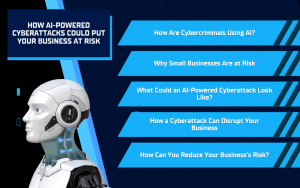
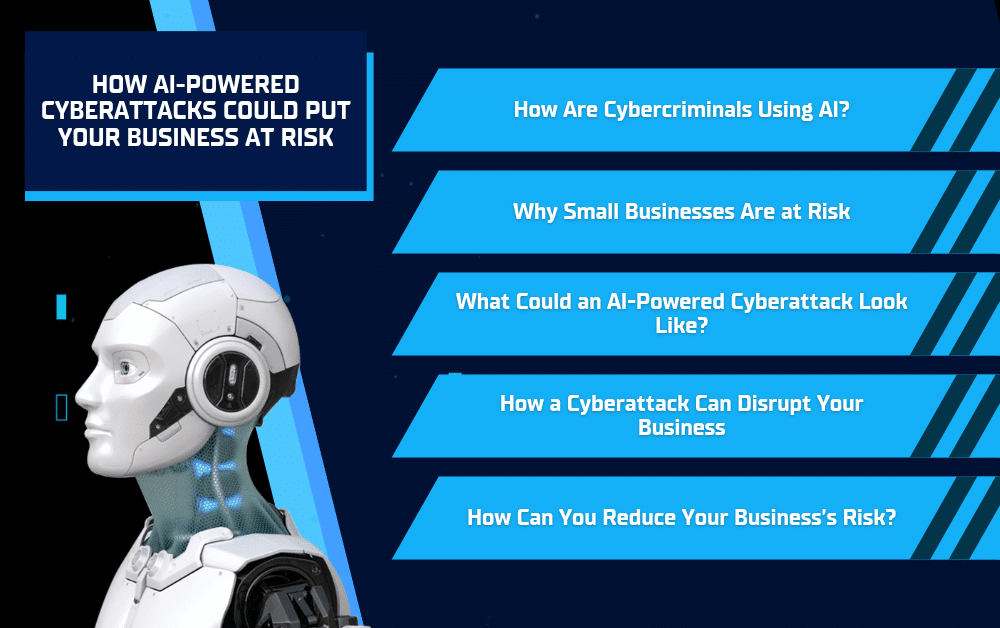
How Are Cybercriminals Using AI?
Finding Security Weaknesses Faster
Cybercriminals can use AI to examine websites, identify exposed systems, and look for software vulnerabilities. Automating parts of this process allows attackers to investigate more potential targets with less manual effort.
A campaign reported by Reuters in October 2026 illustrates this threat. According to the investigation, an attacker used AI agents to attempt intrusions into more than 1,200 websites, successfully compromising over 100. AI-powered cyberattacks can turn an overlooked security gap into an opportunity for criminals operating at scale.
Making Scams More Convincing
AI can also help criminals write polished emails and tailor messages using publicly available business information. A fraudulent request may reference an employee’s role, imitate a vendor’s tone, or sound like a routine business conversation.
That means poor spelling and awkward wording are no longer reliable warning signs. Employees need to examine what a message asks them to do, particularly when it involves payments, passwords, or sensitive information.
Why Small Businesses Are at Risk
Automated Attacks Can Target Any Business
Your business does not have to be well known to attract an attacker’s attention. Automated tools can search for exposed systems and software vulnerabilities across many businesses. If your technology has an accessible weakness, it could become a target regardless of how many employees or locations you have.
Small businesses also hold information criminals can use, including customer records, employee details, and financial data. Access to a business email account could help an attacker impersonate your company when contacting customers or vendors.
Common Weaknesses Create Opportunities
AI-powered cyberattacks can take advantage of familiar security gaps, including:
- Outdated software: Unpatched applications and website components can leave known vulnerabilities exposed.
- Reused passwords: A password stolen from one account may give attackers access to another.
- Unsecured remote access: Poorly protected remote connections can provide an entry point into business systems.
- Excessive permissions: Unnecessary access can increase the damage caused by a compromised account.
These weaknesses can develop as a business adds employees, adopts software, or changes providers without regularly reviewing its security.
What Could an AI-Powered Cyberattack Look Like?
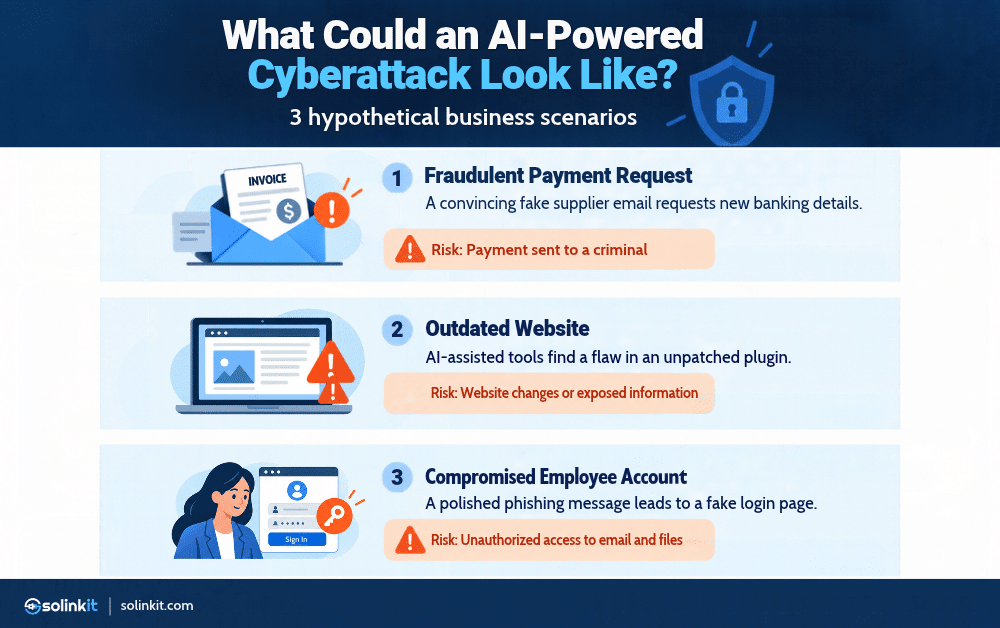
The following hypothetical scenarios show how AI-powered cyberattacks could affect everyday business activities.
A Fraudulent Payment Request
Your bookkeeper receives an email that appears to come from a regular supplier. It references a service your company uses and requests that future payments go to a new bank account. An attacker could use AI to draft convincing language based on publicly available information. Without a separate verification call to a known contact, the payment could go to the criminal.
An Attack on an Outdated Website
An outdated website plugin contains a known vulnerability. An attacker uses AI-assisted tools to identify the weakness and attempt to exploit it. If successful, the intrusion could allow unauthorized changes to the website or access to information, depending on the vulnerability and the site’s configuration.
A Compromised Employee Account
An employee receives a polished message directing them to a fake login page. After they enter their credentials, an attacker attempts to access the real account. If additional protections do not stop the login, the criminal could read emails, access shared files, or impersonate the employee in further messages.
How a Cyberattack Can Disrupt Your Business
Downtime and Unexpected Costs
When employees cannot access email, scheduling software, or customer records, routine work can quickly stall. Orders may go unprocessed, appointments may need to be rescheduled, and customers may struggle to reach your team.
The financial impact can extend beyond restoring systems. Your business may need outside technical support, overtime to catch up on delayed work, and time to determine what information was affected. Even a brief interruption can create a backlog that takes days to resolve.
Damaged Customer Trust
Customers trust your business to protect the information they share. If an attacker accesses that information or uses a compromised account to send fraudulent messages, customers may question whether future communications are legitimate.
Rebuilding confidence requires clear communication and meaningful follow-through. For a small business built on personal relationships and referrals, that effort can continue long after systems are restored. Preparing for AI-powered cyberattacks helps protect both daily operations and the relationships your business depends on.
How Can You Reduce Your Business’s Risk?
Strengthen Everyday Security
Reducing your exposure to AI-powered cyberattacks starts with consistent security practices. Review these measures with your team and IT provider:
- Keep software updated: Apply security updates to computers, business applications, and website components.
- Protect accounts: Use unique passwords and multifactor authentication, especially for email, financial systems, and remote access.
- Verify unusual requests: Confirm payment changes or requests for sensitive information through a known phone number or another trusted channel.
- Limit permissions: Give employees and vendors only the access their work requires, and remove accounts when access is no longer needed.
Prepare for an Incident
Security measures reduce risk, but businesses also need a plan for responding when something goes wrong. Employees should know how to report suspicious activity and who can take action to secure affected accounts or systems.
Maintain backups that are protected from unauthorized changes and test whether critical information can be restored. Work with your IT provider to establish monitoring and a response process, including how essential operations would continue during an interruption. Solinkit’s managed IT services include proactive monitoring, cybersecurity, and backup and recovery support to help businesses prepare for these challenges.
Strengthen Your Cybersecurity With Solinkit
AI-powered cyberattacks give criminals more ways to target businesses, but consistent security practices can help reduce your exposure. Keeping systems updated, protecting accounts, and preparing for interruptions can make a meaningful difference in how your business prevents and responds to threats.
Solinkit helps businesses strengthen their technology through proactive monitoring, cybersecurity, and backup solutions. Contact Solinkit to discuss your current security practices and identify practical next steps to protect your business.